Transportation
Acoustics, Data Science, Engineering, & Urban Planning
M.S. Civil and Environmental Engineering (Transportation)
@ UC Berkeley | May 2027
B.S. Statistics and Analytics | B.A. Music
Minor in Urban Studies and Planning
@ UNC-Chapel Hill | May 2026
Academic Research
Acoustics
Project: Capstone research paper for the music major at UNC-Chapel Hill
Subtitle: How Global Cities Use Music and Sound to Influence Behaviors and Psychologies in their Train Stations
Collaborator: Dr. Mark Katz (advisor)
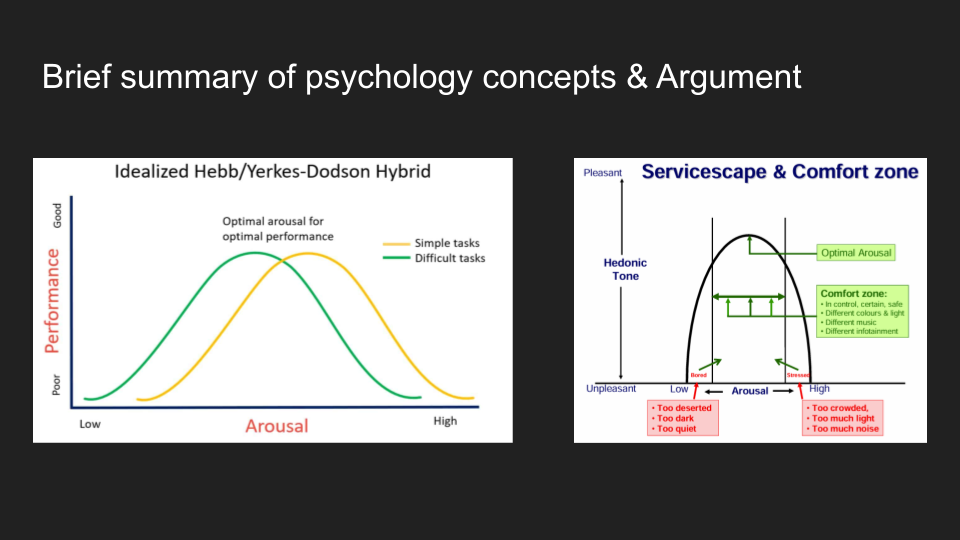
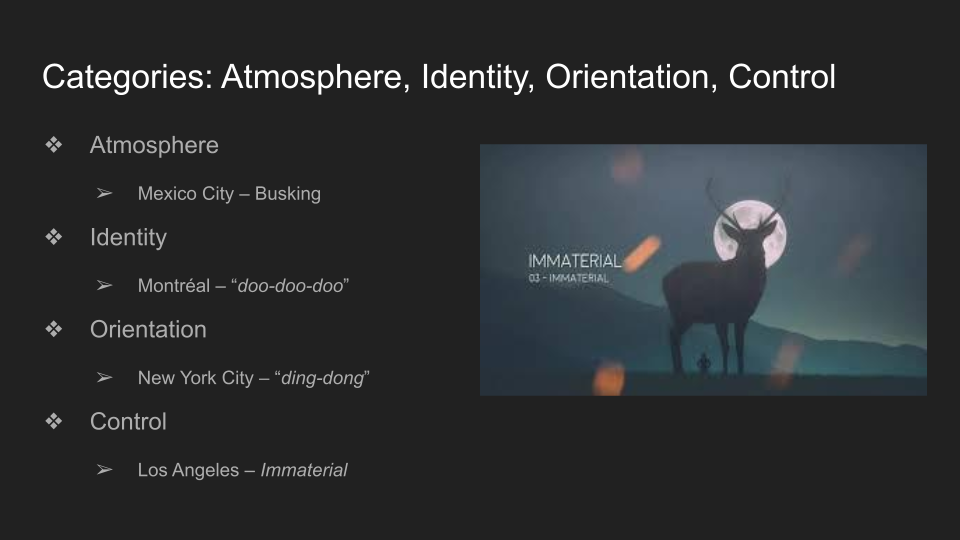
Summary: Rail agencies around the world leverage acoustics and music to psychologically affect users of their stations to improve the transit experience. In this paper, I identify four categories of psychological manipulation — Atmosphere, Identity, Orientation, Control — and I explore how different agencies manufacture their stations’ acoustics to achieve results in each category. A case study of Japanese rail systems introduces each category before a global analysis. This paper is written for a musicology audience with technical depth in psychology and acoustics.
Data Analysis & Engineering
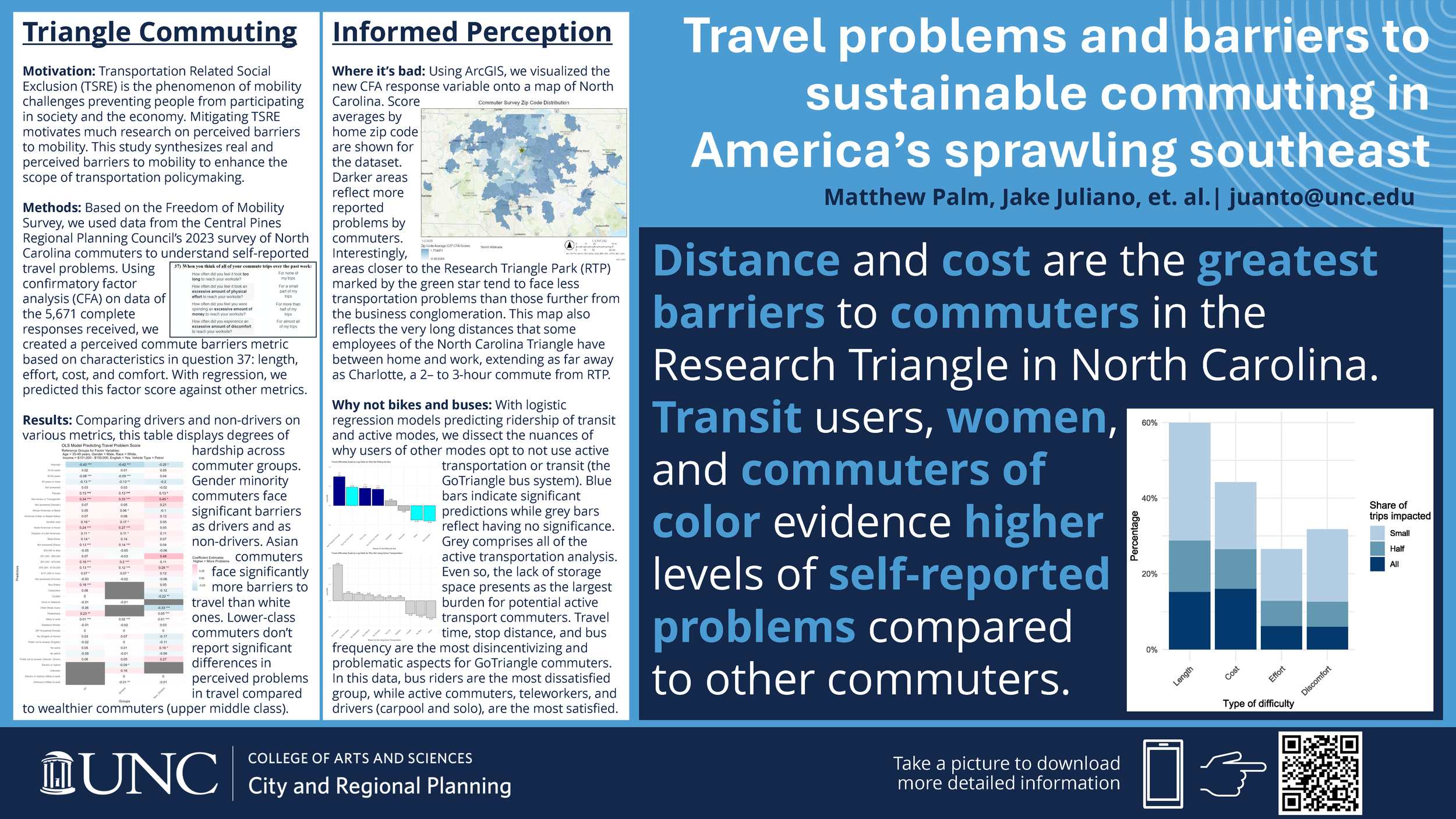
Project: Poster presentation at the Transportation Research Board (TRB) 2025 Annual Meeting
Topic: Survey analysis of travel problems and barriers to sustainable commuting in central North Carolina
Collaborators: Dr. Matthew Palm (advisor), Jenna Kolling, Dr. Molly DeMarco, Dr. Allie Thomas
My Role: Data analyst, author, presenter
Analyze the travel survey data using factor analysis, PCA, and ensemble methods in R
Use GIS and R to conduct spatial analysis on the results as part of creating visualizations of our results
Present with Dr. Matthew to the Palm to Central Pines Regional Council and at TRB
Abstract: This study investigates the relationship between self-reported travel problems and perceived barriers to sustainable travel modes among commuters in the Research Triangle region of North Carolina. Using data from a 2023 survey of over 5,000 commuters, we examine how travel difficulties influence barriers to public transit and active transportation. Commute length is the most frequently reported problem in these data, with financial concerns more prevalent among lower-income commuters. Commute problems are gendered and racialized; women, younger adults, and people of color report higher travel difficulties. Disparities by gender identity are more pronounced among non-drivers. Single-occupancy vehicle (SOV) commuters reporting more travel problems are more likely to perceive barriers to transit, such as long travel times and distant stops, while barriers to active travel are less associated with SOV commuters’ difficulties. Notably, electric and hybrid vehicle owners report fewer travel problems. The findings emphasize the need for targeted interventions, including improved public transit service and safer infrastructure for active modes.
Urban Planning
Project: Individual study research paper in urban geography at UNC-Chapel Hill
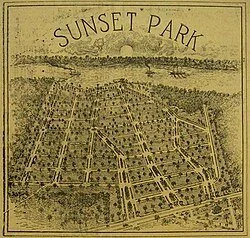
Topic: Case study of how a local community blocked an NYCDOT street upgrade and what motivated them
Collaborator: Dr. Nina Martin (advisor)
Abstract: Bicycle infrastructure projects in America elicit strong sentiments about gentrification and inequality. This case study on a road diet in Brooklyn, New York examines what communities prioritize most in urban redesign projects and some methods by which communities can influence civil projects. 7th and 8th Avenues in the Sunset Park neighborhood were rated to have some of the most dangerous intersections in the city before the DOT started its project to address public and government concerts over safety. However, the NYCDOT broke multiple laws in its process of community engagement and was subsequently sued successfully by residents of Sunset Park, stopping the project’s advancement. Concerns over gentrification, transit accessibility, business health, and parking accessibility were raised as well, but the main focus of this project’s controversy was over the DOT’s community engagement. The literature surrounding issues raised in this case study supports the public in some instances and the DOT in others, highlighting the disconnect between public perception and empirical findings regarding urban dynamics. This paper concludes that a refocusing of community engagement onto making community members feel like they are planners in the process rather than an external entity regardless of expressed sentiments would foster increased completion rates of civil projects, ultimately increasing the amount of wellbeing that government agencies can provide.
Class & Club Research Projects
Transportation in the Global South
Project: Research paper and project presentation for the class PLAN 576 (Urbanism in the Global South) at UNC-Chapel Hill
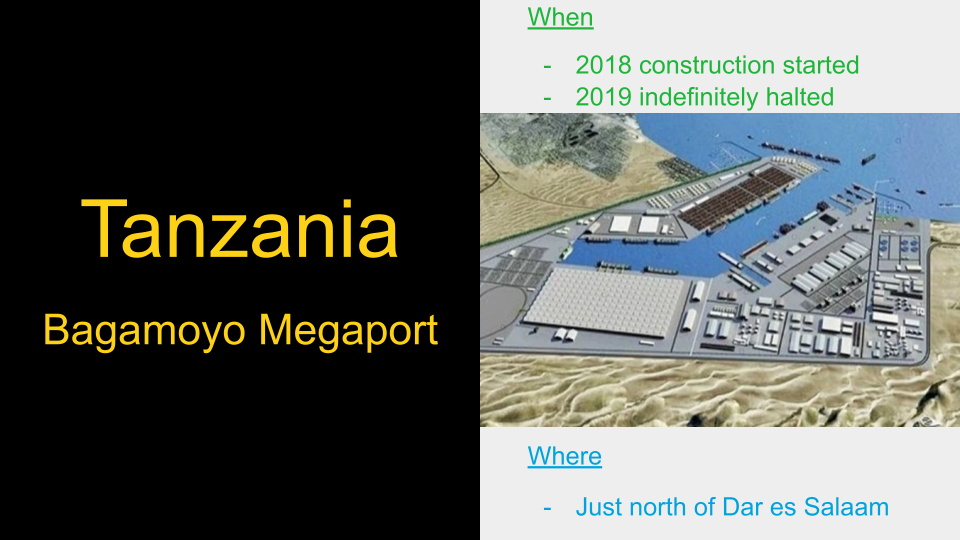
Subtitle: How the Belt and Road Initiative Behooves and Challenges the Economies and Geopolitics of East African Nations
Collaborator: Dr. Shakirah Hudani (professor)
Summary: In seeking to dissect the nuances of the Belt and Road Initiative, this paper will divulge how the BRI serves local communities, how it serves Chinese geopolitical interests, the extent to which it is colonizing, and what the future looks like as a result of BRI completion. To exemplify these dynamics, this paper will compare three case studies of BRI infrastructure abroad, each from a different East African country: a port in Djibouti, a light rail in Ethiopia, and a port in Tanzania. The projects in Djibouti and Ethiopia were successfully built, whereas the project in Tanzania was halted due to the national government feeling exploited by China’s demanded stake in the port for decades after construction completion. This comparative analysis allows for achieving a representative understanding of the impacts of completed BRI projects and of the non-Western hurdles for the BRI. Further, this will contextualize China itself as a ‘global city’ (‘global empire’) in Saskia Sassen’s framework.
Traffic Engineering in North Carolina
Project: Presentation for the semester project for the class PLAN 739 (Transportation Planning Models) at UNC-Chapel Hill
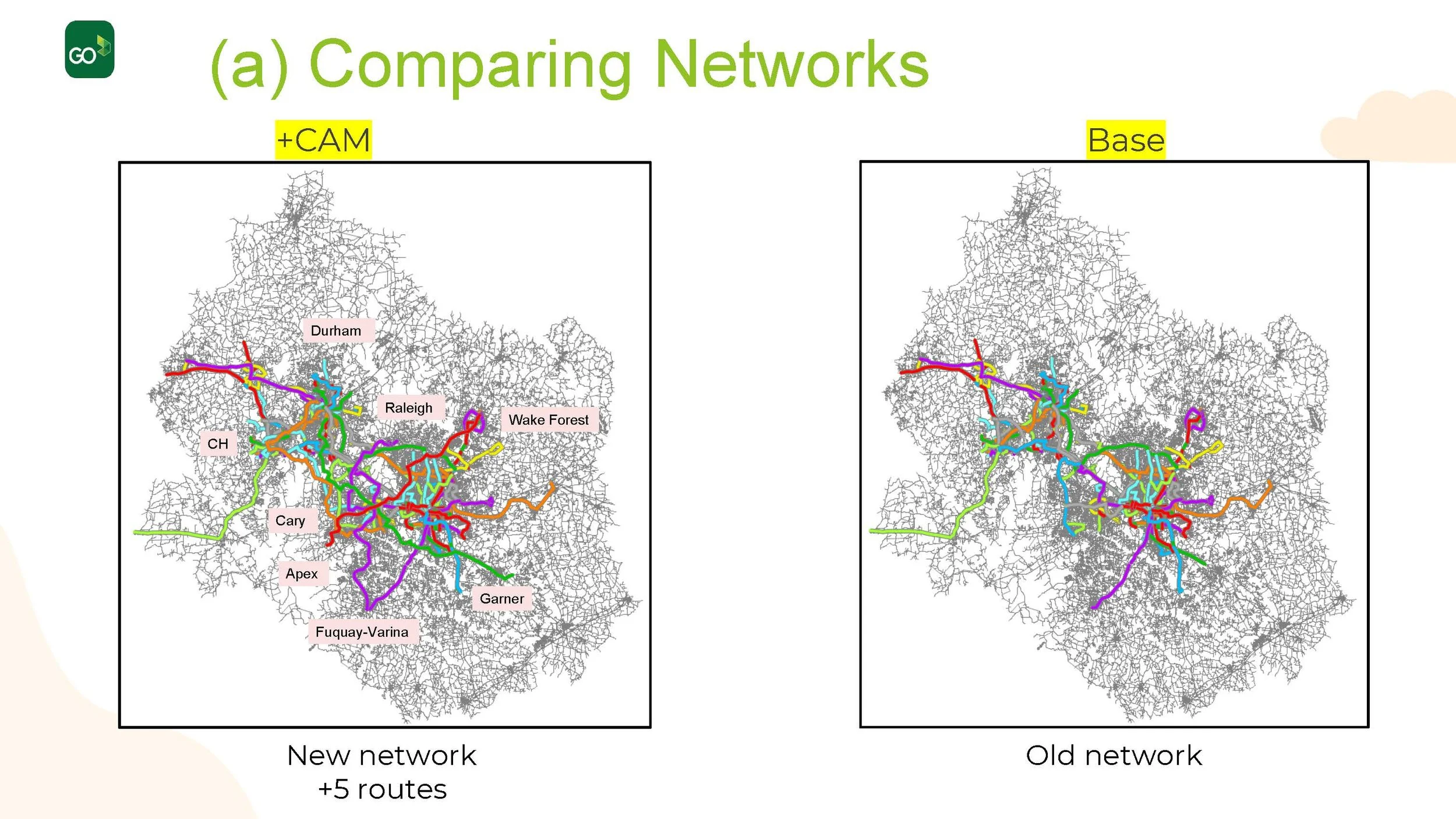
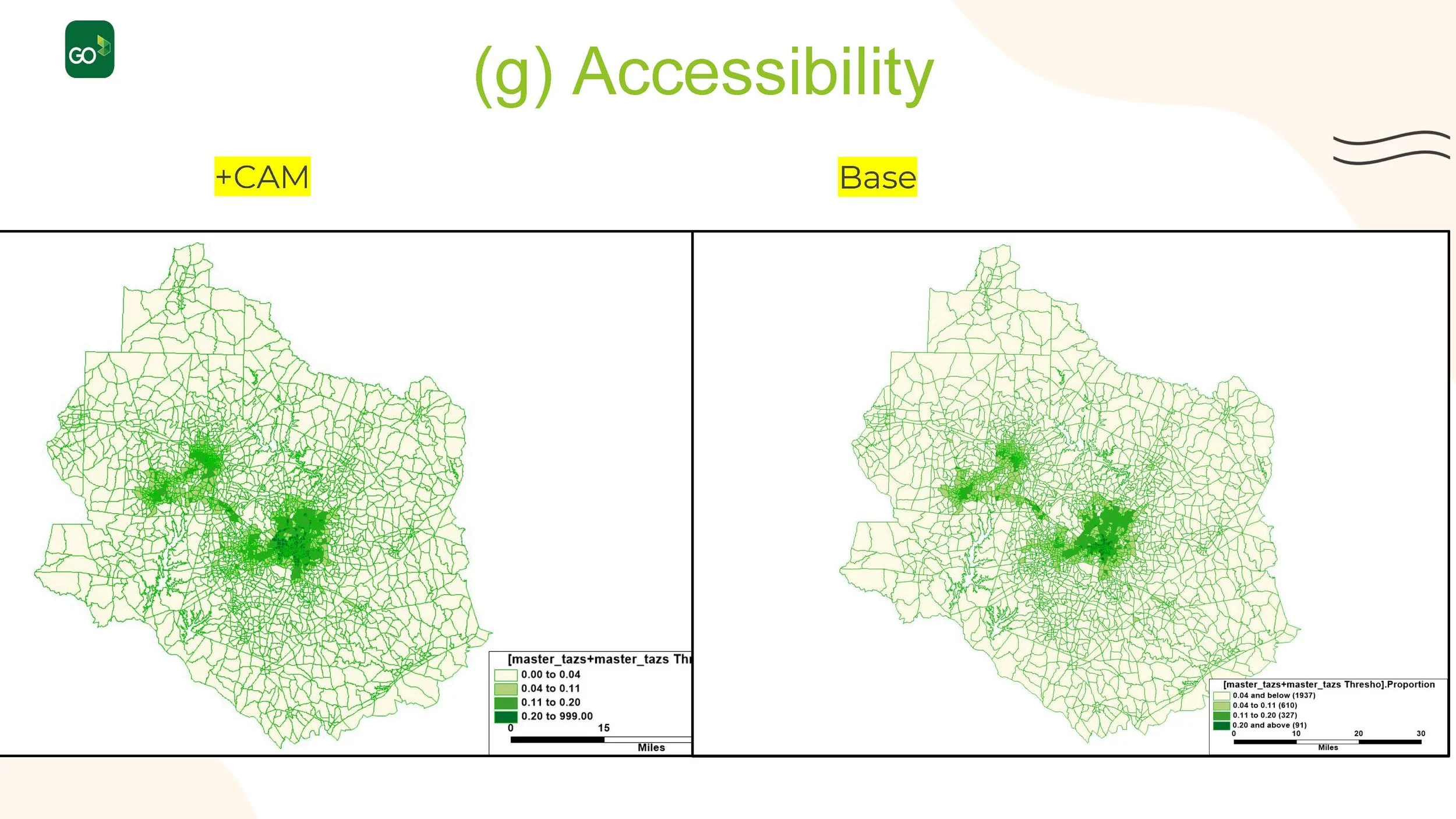
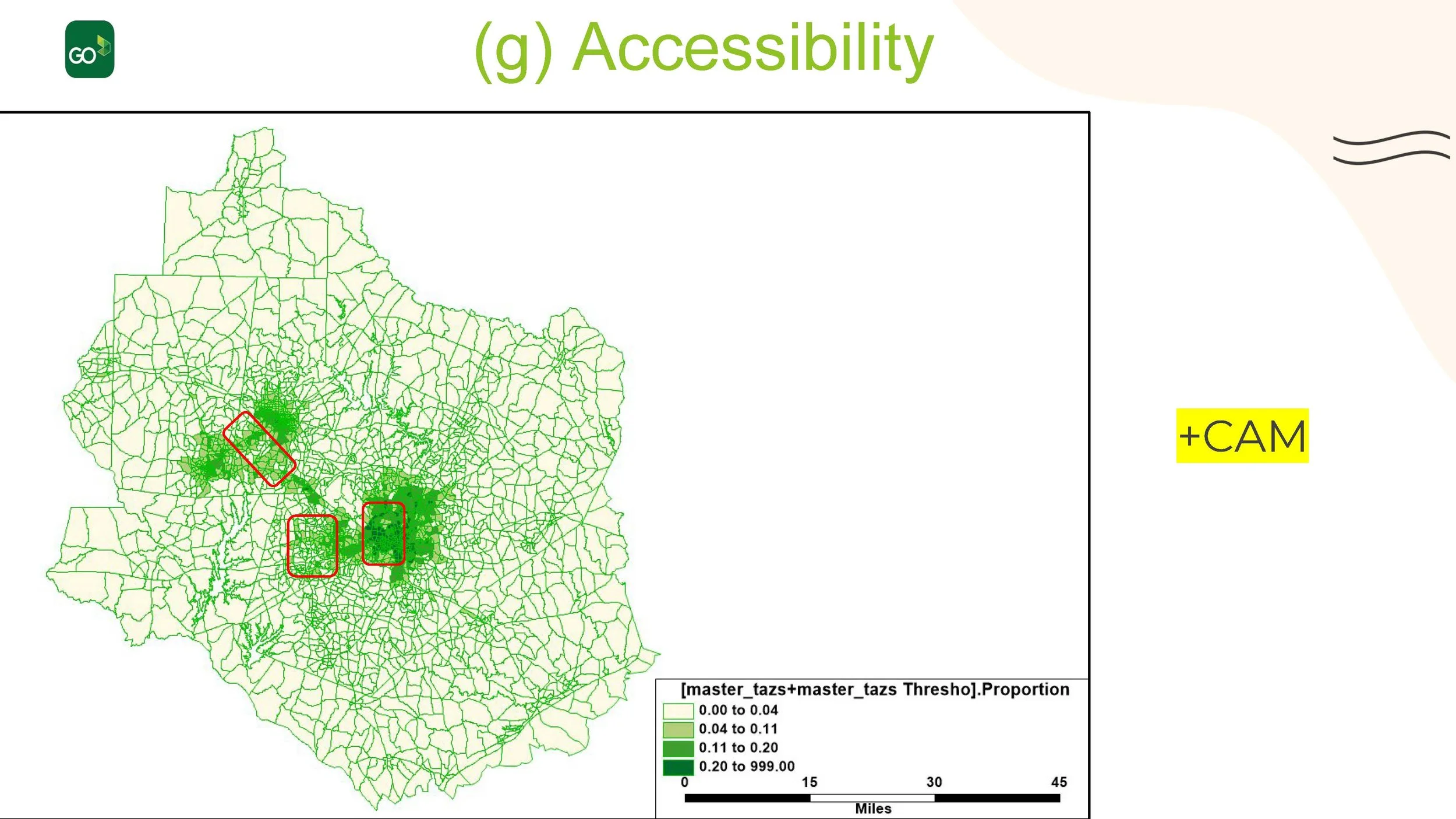
Subtitle: How Adding 5 New Town-of-Cary-Oriented Transit Routes to the North Carolina Triangle Evidences Significantly Reducing Congestion and Greatly Increasing Accessibility Across the Entire Region
Collaborators: Lydia Adjetey, Mohammad Haider Kamruzzaman, Dr. Matthew Bhagat-Conway (professor), Dr. Leta Huntsinger (professor)
My Role: Route designer, travel demand modeler
Design the routes of our +CAM suburban bus service
Edit the TransCAD route files to reflect +CAM changes
Run travel demand simulations in TransCAD
Analyze policy and financial implications of +CAM
Summary: This project uses the four-step travel demand model to forecast travel demand for the year 2025 for both the original and +CAM-revised transit scenarios in central North Carolina. The region is rapidly growing and has poor-to-no suburban transit service; +CAM is a proposal to include suburban development into the transit footprint while remaining within realistic 2020’s capital constraints. The original Triangle Regional Model (TRM) includes data from five thousand household surveys and 2,965 traffic analysis zones (TAZs). We used static traffic assignment with the BPR delay function and the N-Conjugate UE method (the biconjugate Frank-Wolfe method), with parameters α = 0.15 and β = 0.4. We ultimately found both accessibility and congestion improvements from +CAM.
European Transportation in America
Project: Background guide for MUNCH XXV (Model United Nations high school conference hosted by UNC-Chapel Hill)
Topic: How can the modern European aviation industry best compete with rail industry where the political landscape favors the rail industry?
Collaborators: Anna Legge, Catherine McGuire
Committee Overview: Once soaring high as the dominant mode of rapid transit, Europe’s aviation industry is now under siege. A formidable rival, the train industry, has surged in popularity, threatening the skies with sleek, high-speed rail networks that boast lower carbon footprints and reduced fares. As if this weren’t enough, the looming specter of climate change has intensified government scrutiny, sparking an unprecedented wave of regulations that dictate everything from route efficiency to fuel usage. Trapped between the train industry’s encroachment and intensifying climate policies, how can Europe’s planes defend their skies? Competitiveness with the train industry—not to mention other international aviation—is critically important as European aviation faces the challenges of decarbonization and globalization. Make no mistake: to protect its domain, the plane industry must deftly navigate the labyrinth of environmental policies, recalibrate its strategic alliances, and prove that its fleet can meet Europe’s evolving standards for a sustainable future. Every flight path, every regulation must align with a vision that secures aviation’s place in tomorrow’s Europe. Buckle in and brace for turbulence.

Project: Op-Ed report for the class PLAN 247 (Solving Urban Problems) at UNC-Chapel Hill
Topic: Argument for why and how America could feasibly build Superblocks as seen in Barcelona
Collaborator: Dr. Allie Thomas (professor)
Introduction: If you have visited Barcelona in the past decade, you are sure to have seen two things: the vibrant Catalan culture and dozens of superblocks. A superblock is a conglomeration of mixed-use buildings with interactive outdoor areas whose streets limit vehicular through traffic by converting into pedestrian and bicycle paths. This urban form has become wildly popular, and cities around the world are considering how to incorporate this design. In the land where everything is supersized, the United States should push for integrating the superblock into its own cities. Even where local politics threaten the superblock’s validity, their benefits certainly make superblocks worth fighting for. Here is why.